
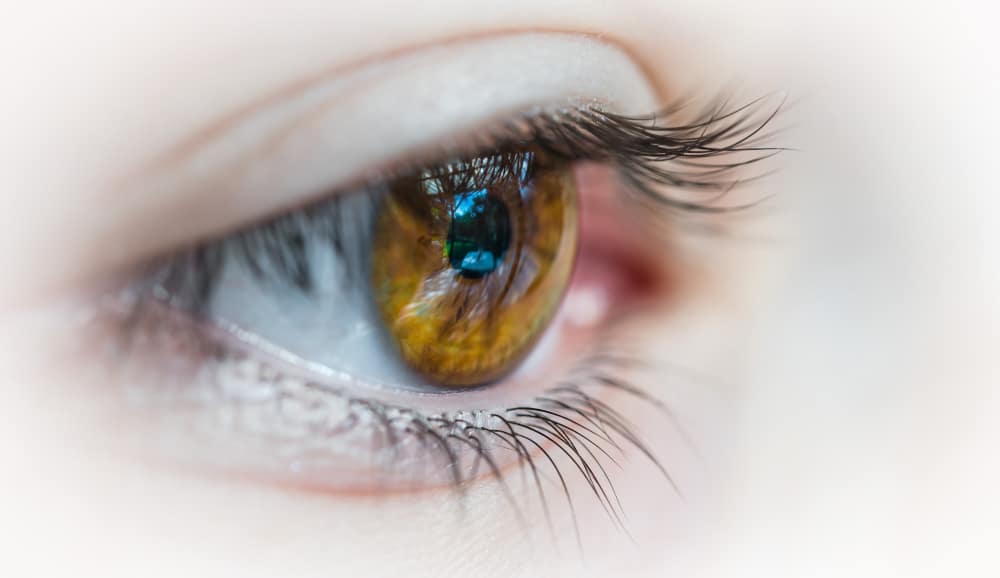
About five million Americans over age 50 suffer from moderate-to-severe dry eyes, and tens of millions more have mild or episodic manifestations of dry eye disease. Dry eye disease causes eye irritation or discomfort, and can decrease functional vision, sometimes causing a dramatic deterioration in the quality of life. Americans spend hundreds of millions of dollars a year on artificial tears, immunosuppressant eye drops, surgery and even amniotic membrane grafts. None of these actually fix the problem and many are expensive.
Enter the Meibomian Gland
The reason these treatments fail is that none of them actually treat the primary cause of dry eyes: Meibomian gland (opens in new tab) atrophy. Meibomian glands are the lipid or oil producing glands in the lids. Blinking stimulates oil secretion into the tears. This oil or lipid secretion becomes the outer layer of the tear preventing evaporation. 86% of patients with dry eyes have some sort of meibomian gland dysfunction.
Avoid Inferior Solutions
Treatments available include immunosuppressing eye drops, surgical implant of tear duct plugs, and cauterization. Restasis eye drops are composed of cyclosporine, an immunosuppressant drug, which can cost around $250.00 for a 30-day supply and must be used daily for years to control symptoms. Many optometrists use LipiFlow, a thermal pulsation technology to open up and clear the meibomian glands. LipiFlow does not cause regeneration, but does stimulate the remaining meibomian gland to function better. Amniotic membrane grafts have been tried but have not proven to be effective and cost well over $4000 to treat both eyes.
How We Relieve Dry Eyes
At Oregon Regenerative Medicine we believe there has to be a better way, and so we have reviewed the scientific literature and distilled this into our treatment protocol for dry eyes.
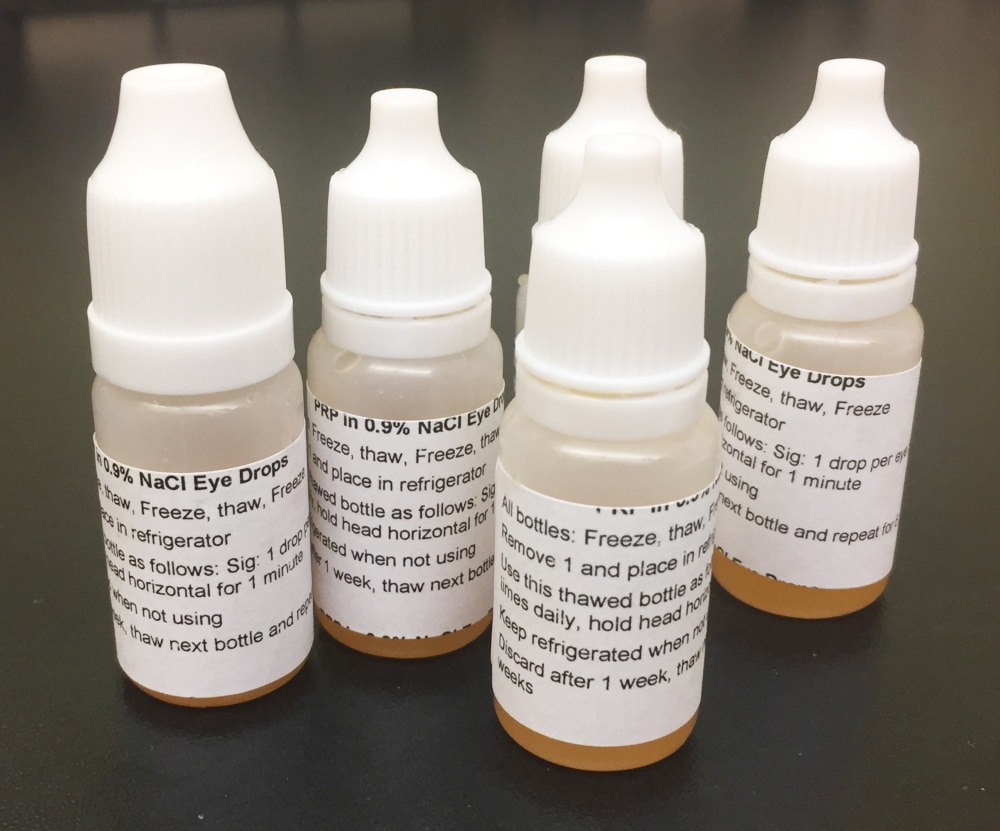
Platelet-Rich Plasma (PRP) is made from the patient’s own blood in our in-house lab. Published studies have shown that Platelet Rich Plasma (PRP) eye drops are absorbed into the meibomian gland and stimulate meibomian gland regeneration over time. PRP eye drops are provided to the patient following a simple blood draw and about 30 minutes of processing. The drops are used 4-6 times per day, as needed to relieve symptoms.
PRP Eye Drops Provide Results
Initial reports from our patients who have used our protocol indicate that the PRP works better than artificial tears. Over the course of several months PRP eye drops provide increasingly longer-lasting relief without side effects.
Boost the Benefits
We recommend that all our dry eye patients:
1) Avoid dehydration by drinking 6 – 8 glasses of water daily
2) Avoid medications that can cause dry eye including: antihistamines, decongestants, nearly all antidepressants, anticonvulsants, antipsychotics, anti-Parkinson’s drugs, blood pressure drugs including beta-blockers, and some forms of hormone replacement therapy.
If you or someone you know has dry eye syndrome, encourage them to consult with our regenerative medicine experts at Oregon Regenerative Medicine.
Alio JL, Rodriguez AE, Ferreira-Oliveira R, Wróbel-Dudzińska D, Abdelghany AA, Treatment of Dry Eye Disease with Autologous Platelet-Rich Plasma: A Prospective, Interventional, Non-Randomized Study (opens in new tab), Ophthalmol Ther. . 2017 Dec;6(2):285-293. Epub 2017 Aug 8, doi: 10.1007/s40123-017-0100-z
You might enjoy these articles also
- Multifidus Atrophy: When core back muscles turn to fat
- PRP Knocks Out Tennis & Golfer’s Elbow: Why play with pain?
- How to Heal Your Joints in a Matter of Weeks: Same-Day Adipose Tissue Graft Procedure
- FDA says Watch Out for Unapproved Stem Cell Therapies!
- Does Eating a Mediterranean Diet Make You Happier?
- Another solution to the mask shortage? ORM using ozone to disinfect our face masks
- Chronic Shoulder Pain Study: Adipose Biocellular Tissue Injection Instead of Surgery?
- Are you getting platelet-rich or platelet-poor PRP?