
The Ketamine-Assisted Somatic Mindfulness (KASM) Program offers a unique approach to healing, combining ketamine’s transformative effects with the grounding practice of somatic mindfulness. Developed specifically for our clinic by Dr. Kristian Flores, MD, ND, and Ivonne Flores, (opens in new tab) a skilled Somatic Mindfulness Facilitator, the KASM Program invites patients into a supportive environment to explore a new path toward relief and self-discovery. Through careful facilitation and a structured treatment plan, KASM empowers patients to unlock their own healing potential, addressing complex conditions like chronic pain, PTSD, and post-acute COVID syndrome.
What is Ketamine?
Ketamine is a relatively safe medication that has been used clinically for over 50 years, namely as an anesthetic. Recent advances in the use of Ketamine have been remarkable, including its use to treat various conditions that are typically refractory to many conventional treatments, including conditions such as Complex Regional Pain Syndrome, Post-Traumatic Stress Disorders, and even Post-Acute COVID Syndrome (“Long-COVID”).
Ketamine acts primarily as an N-methyl-D-aspartate (NMDA) receptor blocker. Typically, the NMDA receptor releases the excitatory neurotransmitter glutamate, which stimulates neuronal activity. Ketamine blocks this receptor, thus decreasing excitatory neuronal activity, most notably in the Prefrontal Cortex and the Hippocampus.
The direct decrease in neuronal activity from Ketamine use is thought to be relatively short-lived, lasting a few hours at most. Of course, the mechanisms by which ketamine affects the neuronal pathways that govern cognition, chronic pain, mood, and other autonomic nervous system processes are multi-faceted and complex (including effects on GABA-A, GABA-B, and mTOR among others).
What happens because of this blockade varies significantly depending on where in the brain it occurs. In certain areas of the brain, the blockade is followed by a surge in the excitatory neurotransmitter, glutamate. This surge is thought to be responsible for an increase in factors that promote the growth of synapses, thus reversing damage that can occur due to chronic stress and depression.
This surge of glutamate induces a surge in serotonin and noradrenaline. Significant decreases in serotonin are thought to be associated with the persistent neurocognitive symptoms in Long COVID (brain fog, fatigue, depression, attention deficit, etc.).
In the Hippocampus, NMDA blockade decreases activity in channels used to access traumatic memories and recall feelings of stress. This is thought to be the main mechanism by which ketamine aids with PTSD symptoms.
Still, in other areas of the brain, the blockade can trigger a “reset” phenomenon in the central nervous system. In this case, the therapeutic effects are most associated with blocking central mechanisms of sensitization found in pain patterns such as complex regional pain syndrome.
What is Somatic Mindfulness?
Somatic Mindfulness is the practice of focusing attention on the present experience while listening to what your body is trying to convey.
While the practice involves focusing on sensations in your body, the emphasis is on maintaining present focus without letting the physiological sensations of an overstimulated nervous system become the center of your attention. The focus is to create a grounded space to observe and connect with what your body is trying to tell you. This practice invites you to listen to your body.
What is Ketamine-Assisted Somatic Mindfulness?
The Ketamine journey itself is powerful but works best when used as part of a comprehensive treatment plan. For this reason, we created the Ketamine Assisted Somatic Mindfulness (KASM) Treatment Program.
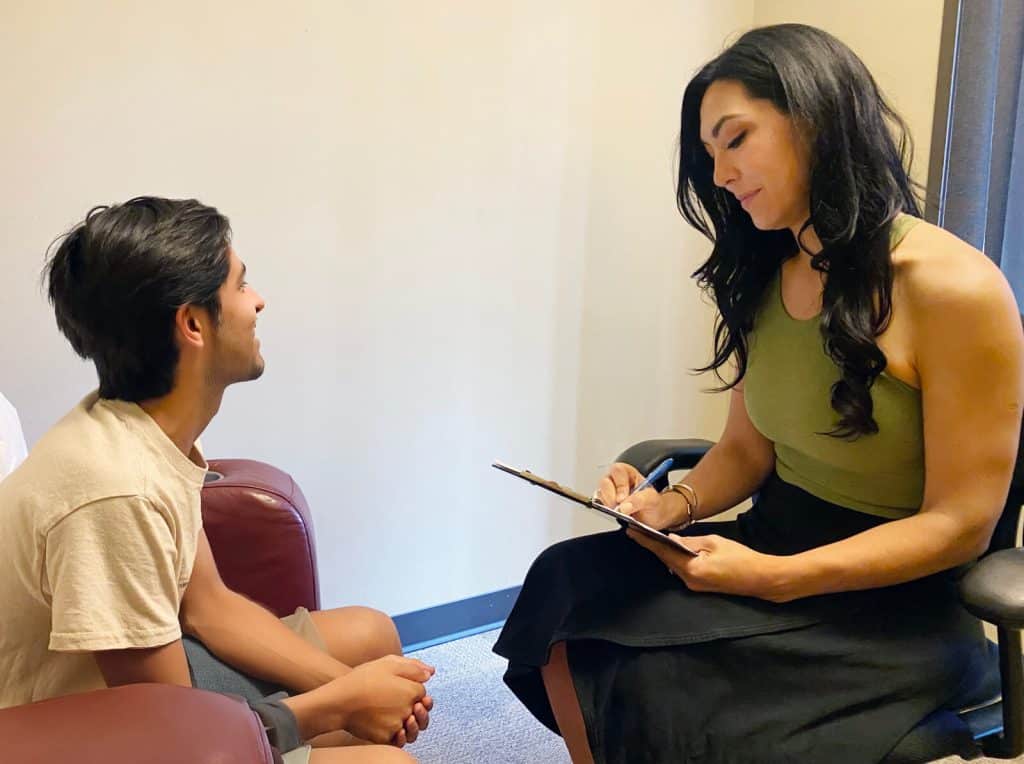
The goal of pairing Ketamine treatment with Somatic Mindfulness is to help our patients get the most benefit from the experience by approaching treatment with intention while our facilitators hold a supportive space.
As a dissociative, ketamine can create a non-ordinary state of consciousness, facilitating a profound experience that may differ from one’s ordinary reality and usual sense of self. These peak experiences have been shown to expand one’s perspective and understanding of existence and may help you access your own healing wisdom. Your providers serve as a facilitating guide, helping you process the experience and its impact on your everyday life. The goal is to help our patients safely explore the Ketamine experience with gentle guidance, allowing them to make these learned experiences part of who they are, rather than something they did.
The power of this experience isn’t limited to the short time you are under the influence of the medicine. This process naturally unfolds over the days and weeks after treatment, and later reflection often provides key perspectives on your work.
What Conditions May Benefit From KASM Therapy?
- Chronic Pain and Fatigue Syndromes (CPS/CFS/Fibromyalgia)
- Complex Regional Pain Syndrome (CRPS)
- Post-Traumatic Stress Disorders (PTSD)
- Post-Acute COVID Syndrome (“Long-COVID”)
The KASM Treatment Program
Initial Session (60 minutes):
Clinic office visit with Kristian Flores, MD, ND (opens in new tab), and Somatic Mindfulness Facilitator, Ivonne Flores (opens in new tab). During this session, you can expect to discuss the following:
- Medical eligibility, assessment, and screening
- KASM session orientation
- Understanding the role of KASM facilitation and holding therapeutic presence
- Exploring expectations, concerns, fears, and responses
- Building a relationship of trust and establishing rapport
- Meet our entire treatment team
- Informed Consent: honor pledge, ethical considerations, choice and agency, safety protocols, agreements and boundaries
KASM Preparation Session (45 minutes):
Clinic or telehealth visit 1 week before treatment with Somatic Mindfulness Facilitator Ivonne Flores (opens in new tab). During this session, you can expect to discuss the following:
- Somatic Intention Setting
- Exploring the “why” of intention setting
- Guiding you in finding the intention
- Mapping the Narrative
- Exploring current practices (Breathwork, Meditation, etc.)
- Exploring current support systems (Community, Relationships)
- Creating integration resources
- Procedures and Operations
- Ketamine orientation
- Session preparation instructions
KASM Treatment Session (120 minutes):
Clinic treatment visit with Dr. Flores, Somatic Mindfulness Facilitator Ivonne Flores (opens in new tab), and medical assistant Dixie Johnson (opens in new tab). During this session, you can expect the following:
- Pre-Treatment (15 min)
- Recall the intention with guided visualization or grounding exercise
- Intravenous Ketamine Session (45-60 minutes)
- Post-Treatment (45 min)
- Continue to monitor medical stability
- Integration session
- Recalling integration resources
KASM Integration Session (45 minutes):
Clinic or Telehealth office visit 1 week after treatment with Somatic Mindfulness Facilitator Ivonne Flores (opens in new tab). During this session, you can expect to discuss the following:
- Exploring the Ketamine experience: insight/highlights
- Exploring emerging themes after Ketamine
- Somatic integration: what is showing up in the body?
Additional KASM Sessions (45 minutes):
Every additional KASM session includes a preparation session with somatic intention setting (30 minutes) as well as an integration session post-KASM session (30 minutes)