

If you’re struggling with chronic pain, anxiety, PTSD, or long-COVID symptoms (opens in new tab), a stellate ganglion block (SGB) could offer relief by helping to reset your nervous system. This cutting-edge, ultrasound-guided procedure targets a cluster of nerves in the neck that play a key role in the body’s stress response. By temporarily blocking these nerves, the SGB can help restore balance and reduce symptoms associated with an overactive fight-or-flight system. At Oregon Regenerative Medicine, Dr. Kristian Flores, MD, ND (opens in new tab), specializes in advanced interventional treatments like the Stellate Ganglion Block and offers expert care tailored to your unique needs. Keep reading to learn how this procedure works, what to expect, and whether it’s right for you.
Jump to Section:
What is the stellate ganglion? (opens in new tab)
What is a stellate ganglion block? (opens in new tab)
How does the stellate ganglion block work? (opens in new tab)
What can I expect? (opens in new tab)
- How many treatments will I need? (opens in new tab)
- How long does the procedure take? (opens in new tab)
- How will I feel afterward? (opens in new tab)
- Do I need to rest after an SGB? (opens in new tab)
- How long will it take until I see results? (opens in new tab)
Who can benefit from a stellate ganglion block? (opens in new tab)
Why choose Oregon Regenerative Medicine for my stellate ganglion block? (opens in new tab)
What is the stellate ganglion?
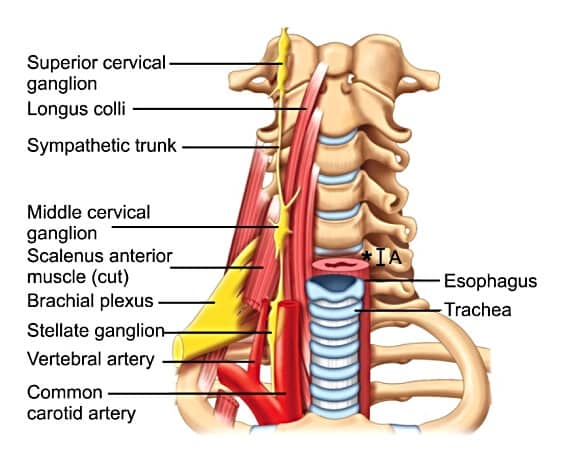
The stellate ganglia are clusters of nerve and nerve fibers located deep in your neck that play a vital role in governing the sympathetic nervous system. The sympathetic nervous system, also known as the “fight-flight-or-fright” system, regulates involuntary cellular functions such as body temperature, blood flow, immunity, organ function, digestion, pain responses and other processes during times of stress. The stellate ganglia are the interface between the memory center in the hippocampus and the body, protecting us by imprinting emotionally or physically dangerous or painful stimuli so we avoid them in the future. The hippocampus can replay this imprint of fear and pain over and over, even from minor, benign stimuli, recreating the physiological response to the original painful stimuli.
[The term “stellate” means star-shaped, though the stellate ganglion is most commonly oval.]
What is a Stellate Ganglion Block (SGB)?
The Stellate Ganglion Block (SGB) is a precise, ultrasound-guided anesthetic injection into the fascia of the longus colli muscle overlying the C6 cervical vertebra. The long-lasting anesthetic is slowly released into the ganglia over 8 hours, bathing the stellate ganglia long enough to turn off the replay of painful stimuli.
The nerves are numbed with an anesthetic solution, allowing them to reboot and return to their normal state.
How Does the Stellate Ganglion Block Work?
The SGB works by “resetting” the interface between the hippocampus and the sympathetic nervous system. When the anesthetic solution numbs (or blocks) these nerves, they temporarily stop functioning, allowing them to reboot and return to their normal state. This reset can help alleviate conditions driven by the overactivation of the fight-or-flight response.
When facial muscles contract as we express ourselves, you develop creases in your skin. Neuromodulator compounds relax muscles and therefore reduce the appearance of wrinkles.
It is common to experience Horner’s syndrome symptoms after a Stellate Ganglion Block. On the left side of this patient’s face, where the needle was inserted, you can see decreased aperture (droopy eyelid) and some redness.
What Can I Expect?
Number of Treatments: Typically, at least two treatments are recommended given that the ganglia are located on both the right and left sides of the neck and can only be blocked one side at a time (for theoretical safety reasons).
Duration of Treatment: The procedure takes about 30 minutes; the injection itself takes about 2-3 minutes. After the injection, you will rest comfortably in one of our reclining chairs for 20-30 minutes so we can monitor your response and ensure the desired outcome.
How Will I Feel Afterward? Some temporary side effects may occur, including:
- Symptoms of Horner’s syndrome (opens in new tab), such as a droopy eyelid and pupil constriction on the side of the injection
- Hoarseness
- A sensation of feeling “out of sorts”
Do I Need to Rest After an SGB? Yes, we recommend allowing time for the sympathetic system to reset for the remainder of the day, including minimizing excess stress and stimulation.
How Long Before I Know if It’s Working? The response to the SGB can vary widely, though most individuals notice effects anywhere from almost immediately to over the first week and beyond.
Who Can Benefit from a Stellate Ganglion Block?
Individuals experiencing the following conditions may benefit from SGB:
- Post-Traumatic Stress Disorder (PTSD)
- Long COVID (e.g., brain fog, fatigue, POTS, anxiety, loss of smell or taste)
- Anxiety
- A variety of Chronic and Neuropathic Pain Conditions
Why Choose Oregon Regenerative Medicine?
Meet Dr. Kristian Flores, MD, ND (opens in new tab): Dr. Flores is a board-certified physiatrist who specializes in treating disabling conditions such as brain injury, long COVID, and hypermobility disorders. With extensive expertise in interventional procedures targeting the nervous system, Dr. Flores provides advanced therapies, including:
- Stellate Ganglion Blocks
- Ketamine Therapy (opens in new tab)
- Bilateral 2-Level Cervical Sympathetic Ganglia Hydrodissection
- 2-Level Cervical Sympathetic Blocks (CSB)
At Oregon Regenerative Medicine, we are deeply committed to providing compassionate, innovative, and advanced care tailored to each patient’s unique needs.