
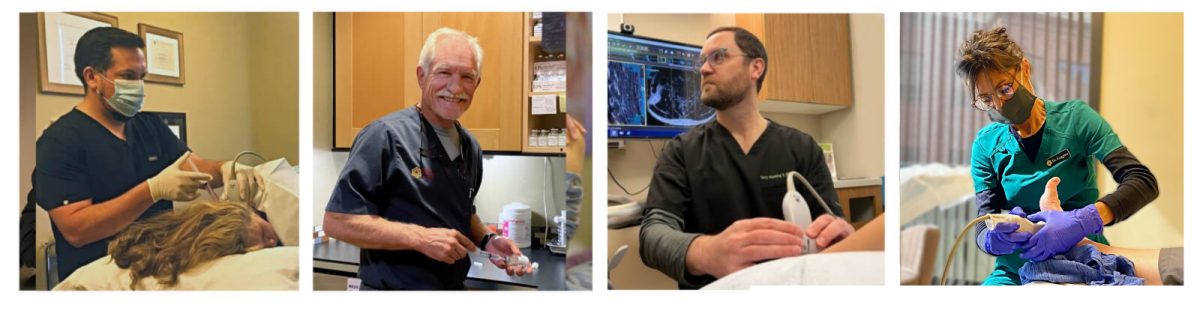

For the nearly 27 million Americans living with knee osteoarthritis, one treatment has emerged as a beacon of hope for effective pain relief without drugs or surgery: Platelet-Rich Plasma (PRP) injections. While Oregon Regenerative Medicine has been a leader in knee PRP treatment for over 20 years, AARP has been slow to fully endorse this treatment. This article draws from insights shared in the January 2026 American Association of Retired Persons (AARP) newsletter and their coverage over the last 12 years and examines how PRP therapy has evolved from an experimental treatment to a recognized option for managing knee osteoarthritis.
What Are PRP Injections?
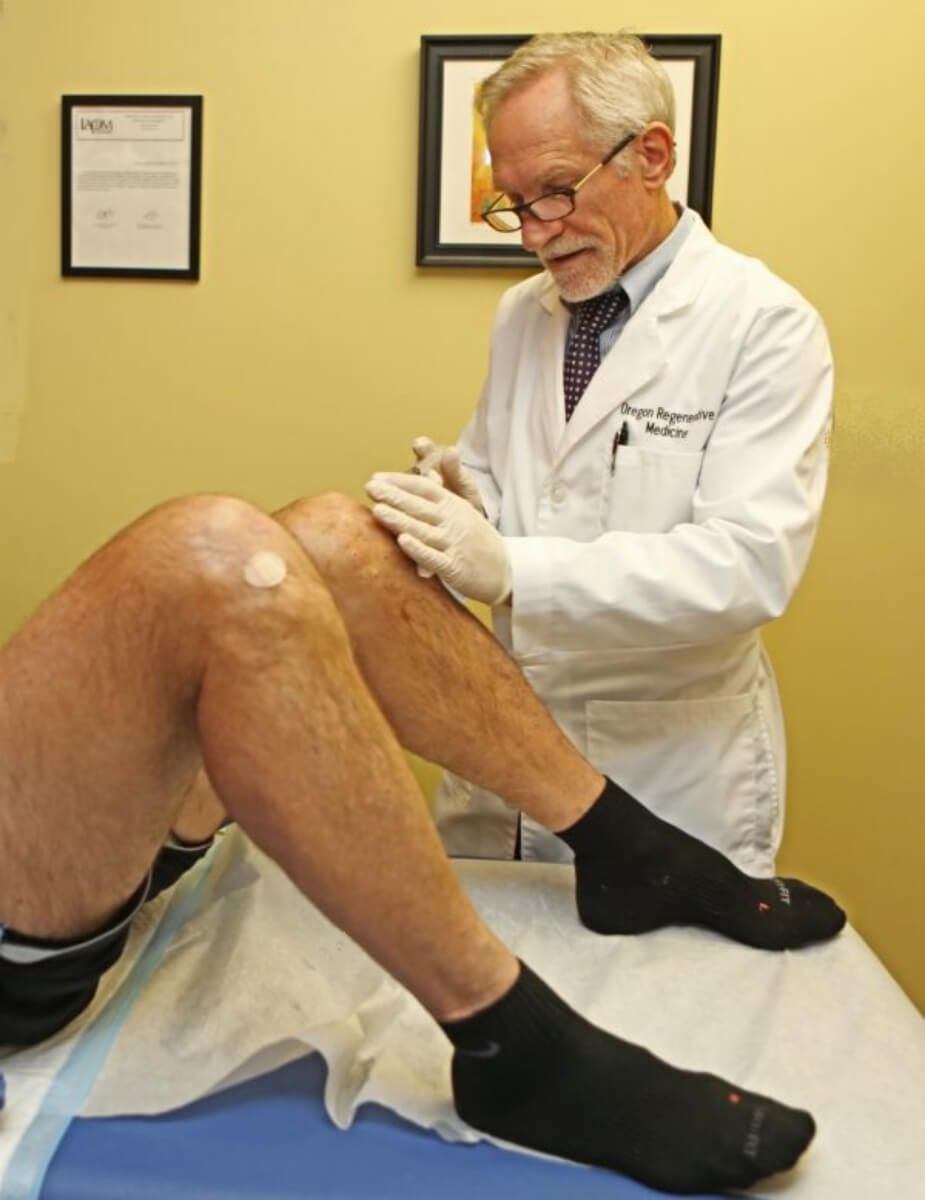
Platelet-Rich Plasma (PRP) therapy involves withdrawing and centrifuging a patient’s own blood in a multistep process that isolates and concentrates the platelets and circulating growth factors. These concentrated platelets and growth factors are injected into damaged joints, ligaments, and other tissues to reduce pain and promote healing in osteoarthritis patients.
How PRP Works for Knee Pain
PRP concentrates platelets to levels 5 to 10 times higher than normal blood, harnessing the body’s own healing mechanisms. Research shows that PRP:
- Reduces inflammation in knee joints
- Slows the progression of knee osteoarthritis
- Can promote cartilage regeneration
- Uses the patient’s own biological materials, reducing adverse reaction risks
AARP’s Evolution on PRP: 2014 to 2026
May 2014: Early Recognition
In May 2014, AARP introduced their readers to PRP’s potential, describing it as showing “great promise” for osteoarthritis patients. The organization highlighted PRP’s natural approach to healing and its innovative use of the body’s own platelets.
September 2024: Over 2,000 Published Studies Supporting PRP for Osteoarthritis
By September 2024, with over 2,000 published studies supporting PRP for osteoarthritis, AARP published another supportive article on PRP for knee pain and arthritis. Medical experts cited impressive results:
Dr. Kenton Fibel, a sports medicine specialist at Cedars-Sinai Kerlan-Jobe Institute, noted that “there is good evidence for the use of PRP,” adding that injections typically last about a year, with patients experiencing improvements in both pain and function.
Real patient success: Patients like Steven Ehrlich, a 77-year-old Los Angeles architect, found that regular PRP injections provided enough relief to maintain an active lifestyle including golf, paddle tennis, and even heli-skiing, despite having moderate osteoarthritis.
January 2026: AARP asks, Should You Try Platelet-Rich Plasma Therapy?
The January 2026 AARP newsletter endorses how PRP therapy has evolved from experimental treatment to a recognized option for managing knee osteoarthritis. With over 2,500 research studies published in medical journals, the evidence base continues to strengthen.
PRP vs. Other Knee Osteoarthritis Treatments
PRP vs. Hyaluronic Acid Injections
Research shows PRP is more effective than hyaluronic acid (HA) injections for knee osteoarthritis. AARP cites studies indicating that PRP provides superior pain reduction and functional improvement, with benefits that increase over time and last longer than HA injections.
PRP vs. Corticosteroid Injections
While corticosteroid injections reduce knee pain quickly—often within 48 hours—AARP reminds us that steroids can trigger cartilage deterioration with overuse. PRP uses the body’s natural healing mechanisms without this risk.
Safety Profile of PRP
Because PRP is derived from the patient’s own blood, it eliminates concerns about allergic reactions or rejection. The safety profile is excellent, with minimal risk beyond those associated with any injection procedure.
The PRP Treatment Process
The Arthritis Foundation endorses PRP injections only when performed by specialists thoroughly trained in orthopedic medicine, using ultrasound imaging to precisely target the injection site within the knee joint space.
What to expect:
- Procedure typically takes about an hour
- Patients undergo a series of injections for best results, administered monthly
- Minimal recovery time required, though patients may need to rest the knee for a few days
- Results may take several weeks to appear
- Effects typically last about a year and treatments can be repeated
Who Benefits Most from PRP Injections?
As you would expect, patients with mild to moderate knee osteoarthritis tend to experience better outcomes than those with severe, bone-on-bone arthritis, though even advanced bone-on-bone cases do see benefit.
PRP appears particularly valuable for active individuals hoping to delay or avoid knee replacement surgery. By providing meaningful pain relief and functional improvement, PRP can help patients maintain their quality of life and physical activities for months to years.
According to Dr. Scott Rodeo of Cornell’s Weill Medical College, while results vary from person to person—with some people being “super responders.” For most patients, PRP represents a meaningful enhancement in quality of life.
Cost and Insurance Coverage for PRP
Because PRP isn’t fully FDA-approved for osteoarthritis, most insurance plans don’t cover it. A series of PRP injections typically costs around $2,000 or more. However, for patients who respond well, this can be worthwhile compared to the costs and risks of knee replacement surgery.
Finding the Right Knee PRP Provider
The Arthritis Foundation emphasizes receiving treatment from experienced specialists who:
- Use proper ultrasound-guided injection techniques
- Have quality PRP preparation methods and laboratory facilities
- Are thoroughly trained in orthopedic medicine
At Oregon Regenerative Medicine (ORM), our doctors and laboratory staff are specialists who have optimized PRP preparation methods and have the experience to identify which patients are most likely to benefit. ORM often combines PRP with other therapies, such as stem cell injections, to potentially enhance results in advanced knee osteoarthritis.
Clinical Evidence for Knee PRP Treatment
Over 2,500 research studies published in medical journals have demonstrated that PRP’s benefits go beyond placebo effects. Studies show clinically significant improvements in:
- Pain scores (at 6 to 12-month follow-ups)
- Functional outcomes for knee osteoarthritis patients
- Quality of life measures
The Future of PRP Therapy
As research continues and techniques are refined, the outlook for PRP therapy appears increasingly positive. ORM will remain on the cutting edge of continued advances in regenerative medicine, as more effective PRP formulations and protocols emerge to offer even better outcomes for osteoarthritis sufferers.
Is Knee PRP Right for You?
AARP’s Key Considerations:
Realistic Expectations: PRP isn’t a total cure for knee osteoarthritis, but it can provide significant symptom relief, prevent further deterioration and reverse some of the damage. Results may take several weeks to appear, and individual responses vary.
Cost vs. Benefit: While the out-of-pocket cost is significant, most patients will find PRP worthwhile for avoiding or delaying surgery.
Provider Selection: Choose an experienced specialist with proper training and equipment for best results.
Conclusion: More golf games played, grandchildren chased, and everyday activities enjoyed with less discomfort.
From AARP’s 2014 article describing PRP as showing “great promise” to their January 2026 piece titled “Should You Try Platelet-Rich Plasma Therapy?”, PRP has achieved recognition as a legitimate therapeutic option backed by substantial clinical evidence.
For millions suffering from knee osteoarthritis, PRP represents hope for maintaining active, fulfilling lives without immediately resorting to surgery. As one medical expert noted, injections last about a year and both pain and function improve—a simple statement that translates to golf games played, grandchildren chased, and everyday activities enjoyed with less discomfort.
The journey from experimental therapy to mainstream treatment option continues, but for many patients, PRP has already delivered on its promise: meaningful relief from knee osteoarthritis pain using the body’s own healing power to restore mobility and quality of life.
Want to learn more? Read Dr. Peterson’s Ultimate Guide to PRP on the Oregon Regenerative Medicine website.
Dr. Noel Peterson, ND, DAAPM, is the Medical Director of Oregon Regenerative Medicine, and has practiced naturopathic medicine in Lake Oswego, OR, since 1978. He specializes in natural and regenerative cellular medicine, including Prolotherapy, PRP (Platelet Rich Plasma), and Autologous Stem Cell therapy. Peterson has taught prolotherapy nationally and internationally. In 2019, the Oregon Association of Naturopathic Physicians (OANP) and National University of Natural Medicine (NUNM) selected Dr. Peterson to be honored with naturopathic medicine’s prestigious Living Legend Award.